Answer, sadly, yes. Imo yes. What is to follow in this post will be difficult to write, but I need to do so before I can get down to brass tacks. The question arises — did K consciously, or, perhaps better put, somewhat consciously, know he was disingenuous? For me, after conscious digestion of his spoken and written material plus the reading of certain biographical material and also the watching of certain videos, the links to some of which I may later post here, the answer is, sadly, yes. Btw many people reading are presumably not aware I was a K fanatic for several decades — by several, meaning not just three or four:-) I will be writing about this in the future, but, for now, when I first found a K book in the Sausalito library at around age twenty-five, never previously having heard of him, my life was (or at least was deeply felt to be) transformed. I was almost literally dancing in the streets, filled with great joy, and soon having very powerful and beautiful experiences of (what he called) meditation and, years later, what he called the flowering. This said, I was a troubled, deeply traumatized young person, prone to mystical experiences even as as child but who had no previous context into which to place or evaluate this particular kind of experience. More later, as I need to put it out before I begin some very serious writing here.

In any case, to know one is doing something and to not know one is doing something are two entirely different kinds of experience. I have seen plenty evidence that K did on some level consciously know what he was doing. There is this Dr. Seuss line from his book, One Fish Two Fish Red Fish Blue Fish: “Two fish in a tree, how can that be?” Well, in the land of human imagination, in the imagination of a child, in the imagination of someone who, understandably, does not want to suffer (any more), sometimes many magical things can be seeming to happen, but beware of sorcerers, and sometimes the sorcerer can be oneself. Complicit.

This is the beginning of my serious writing here, not to imply that the previous writing was not serious. but there are different degrees and qualities. In response to a previous comment from Niko (see pt.1), at the time I did not know where I was going with this, though it was intuitive, and now I do know. Basically I will be approaching from the angle/perspective of the Madhyamika Prasangika school of Buddhism. From Google: Quote: “Prasangika is a subdivision of the Madhyamika school of philosophy in Buddhism that uses consequentialist arguments to establish the ultimate truth of emptiness. The name comes from the Sanskrit word prasaṅga, which means “consequence.” Unquote.

The way thought works is to compare one thing to another; this said, and imo a key point, when we do this we are working from a framework. The framework I will be working from here is my personal understanding of the teaching of this particular school of Buddhism, the Consequence (Middle Way school), which is based upon and designed around the utilitarian function of the two aspects of truth. Interestingly, which many reading may not know. one of the main ways this particular teaching is presented is by comparison with the teachings of other Buddhist schools. It is given in this teaching and in the teachings of a couple of other Mahayana Buddhist schools, I think Chittamatrin and also Yogachara (am not sure of the differences between these two and will have to study that), Yogachara being the teaching of those who so-called trained K, and these two schools apparently being similar to Zen, that the Buddha turned the wheel three times for people of different different styles/propensities in the processing of information. We can maybe look at this from the angle of food for thought, the digestion of information. So, the Madhyamika approach labels the Hinayana teachings as the smaller scope, the Zen-like teachings as being the middling scope and their own teaching (of course:-) as the larger scope. Btw all those taking these teachings consider their teachings to be the larger scope, and those taking the Hinayana teachings now call themselves Theraveda, as, understandably, they do not like being labeled as the smaller scope.

The starting point for me here is to lay out the ground for the presentation of this particular topic, the approach of the Middle Way. I intend to do so by comparing the approaches of Gurdjieff and Krishnamurti. By this tactic we can hopefully keep from getting struck in the codified presentation of any particular school or teacher but can digest this material in a way that is more fine-tuned. It is worth noting, btw, that reportedly, and I believe it to be true, G’s final message to his students as he was dying were “a fine mess I leave you in.” Also, one device will be looking at the consonant bases of words. “Ground” is an interesting word, as is “mess.” Neither of these words I have looked at until just now, but “ground” and “mess” will be a grand way to start. The consonant base is what is left when the vowels are removed. More to follow.

I need to comment a little bit in that on an elementary level I kind of knew what I was talking about in that I got the basic gist of the concept, which is somewhat easy for most anyone to understand on an intellectual level, but that is not the whole enchilada (and am not even sure I know what I am talking about here, but food for thought: we do know an enchilada has basic components). To begin, and will make a few more comments later, one thing I wrote was completely wrong ,which goes to show that a ‘clever’ parrot can get the vocalization wrong and then keep repeating it.

Wry, moi, (ha ha) wrote: “Buddhists from this school are not even really supposed to talk about the two aspects of truth unless they are very highly trained, because if this material is presented wrongly, it can lead to a misunderstanding of this teaching and create distortion and even harm.” Woo, and, in short, It is the opposite. People are encouraged to talk about and inquire into and share the two aspects of truth concept (don’t know how many do, though we on the K forums I was on did make an effort to inquire into this). It is the concept of emptiness that what I quoted above actually applies to in that if it is presented in the wrong way it can bring a person into a nihilistic state. A few more comments on that 2006 post Niko quoted to follow, but, also, my present a little more comprehensive understanding of the two aspects will be woven into most all of my posts.

From searching the above title on Google:  quote: “Neti neti” is a Sanskrit phrase that means “not this, not that” or “neither this, nor that”. It is a key element in Jnana Yoga practice and is used in meditation to help people understand the nature of Brahman.

Here’s some more information about “neti neti”

Meaning The phrase is made up of the Sanskrit words “na” and “iti”, where “na” means negation and “iti” means “like this” or “this”. unquote.

You can also search on Google “Nisargadatta the true self” if you want to read about this imo very naive and limited though well intended approach which may on some level have been helpful to some. When I look at the ‘teaching’ of Krishnamurti it is obvious this was basically his approach, though a little more sophisticated in that he did not point to finding a kind of substance or essence (Atman), underlying and all encompassing, which substance was perceived as being ultimately true, but rather he pointed to so called ‘truth’ itself, so a little more sophisticated process of negation. He had quite a lot of Buddhist training, perhaps more than most realize, and I do see in his approach the major difference between Hinduism and Buddhism. This said, there are different schools of Buddhism, and it is written that Buddha turned the wheel three times for three different kinds, ie, propensities of people, in this instance, meaning by propensities an inborn and/or conditioned tendency to process information from a certain angle (or angles, depending how comprehensive the approach).

Will continue with this, hopefully, and here is some food for thought: for many years have been deeply interested and engaged in studying the construction of words, which study has been indescribably helpful, and so I would like to share the incredible richness of this here, Btw both Gurdjieff and Krishnamurti were interested in this, also, though K from a limited angle in that he occasionally used looking at the construction/inner meaning of a particular word as a device. So, to anyone interested in using this as a tool, I suggest pondering the Hindu word, “Neti” as a wonderful way to begin.

Getting down to brass tacks, how to consciously use the biographical Krishnamurti material?  Is it intelligent to look from the angle of it being a story? We are aware of the functional value of metaphor and the great functional value of allegory. Sometimes it is simply not expedient to say something directly because the listener just will not get it, so it may be necessary to approach sideways and from a different angle, which is what on some level I am going to try to do here. Even the choice of telling a particular story is already in some measure on the bias. K was very skilled at using metaphor. He had a special talent in this area that was intuitive, but beauty can be a snake. For me, and I think for many, his ability functioned as a form of skilled linguistic seduction. Sadly, it took me decades to realize this 

Last night I reread Niko’s post, The Ugly Fairy – A look at K’s Childhood, and I will be reading it again — Thank you, Niko, for your discernment. It may be possible use this particular material to develop a more comprehensive understanding, but not in the way K used nature descriptions to bring people into a particular state which they/I then believed to be ultimately true.

The two aspects of truth is a particular way of framing employed by the Middle Way School of Buddhism. The entire approach is designed around this perspective, the focus, in my opinion, being on achieving a stasis or form of stability that is at the same time also generative in that a person does not get stuck in this mode of framing but is able to consciously use it. So how does this work? Btw other schools of Buddhism also have the concept of the two aspects, but the emphasis is slanted toward ultimate truth in a way that is not balanced, imo. (Everything I write here being “in my opinion,” so of course the reader will need to think about this material, test various ideas out and verify them for him or herself). There is always the observer and the observed. This is how the mind works, and there is no way to completely do away with it, except perhaps in a direct movement at a moment of conscious clarity. One metaphor I have often seen for this is “dance.”

The approach of the Middle Way School and of some other major religions, actually, is contrived, a dictionary definition for “contrived” being “created or arranged in a way that seems artificial and unrealistic,” so deliberately framing material to achieve a specific result, which result, put in simple language, is to transform the animal nature of man (man and women:-) in such a way that people and all sentient creatures will not suffer or suffer as little as possible.

So, we know that the observer is not literally the observed in that a person is not a tree. There is always the subjective observer and the object of knowledge. I was looking through notes from a teaching I attended many years ago and found this: “Ultimate truth is not the object of ultilization of a dualistic mind but is realized by the vanishing of dualistic appearances,” and: “dualistic appearance, an appearance when the object and subject are different. Also refers to the appearance of true existence –object appears to exist from its own side.” So what does this mean and how can it be used?

The two aspects of truth is relatively simple to intellectually understand, and I will be writing about that, the main focus being inquiring into the functional value of this particular concept. When Niko and I first learned of the two aspects around twenty years ago, it was a helpful and exciting experience. I recall, to put it in my own words. it explained for Niko how, for example. those inquiring in K groups tend to get stuck on information from their (and presumably our) own limited subjective perspectives. So,what ‘one’ thinks/feels is true is perceived as being ultimately true, but this obviously isn’t true, as different people have different perspectives. For me the concept took some weight off by presenting a possibility of seeing things in a new way. This gave hope and was experienced as freeing until I reacted to something or other and got angry.

To go into this may take a while, which brings us to the subject, ie, question of time, I will be looking at how K framed his version, though to take his approach as the basis for understanding (by negating it, saying not this, not this) seems to me like a lame way to start, so maybe we can find a way to consciously use his material.

((note: I tried to comment on the “The Two Aspects of Truth” post by Niko but the material didn’t go through)).

Hi Niko. Sorry to say I missed seeing this re-post of something I wrote in 2006,. Just discovered it a few moments ago. Yes, we have been meaning to get back into this topic. I could not participate due to time constraints around personal matters but gladly am able to again participate. Thanks for the work you have put into starting and maintaining this blog. It has been a pleasure to inquire and work with you over the years. Basically in 2006 I did not understand a lot though I thought and felt I did, which just goes to show something or other about the subjectively perceived so called veracity of ones own or at least my own thinking and feeling at that time, though hopefully not now. Hmmm ….

So. reading the re-post was pretty boring, but I will try to use my own perceived lack of understanding as some kind of a tool: To begin, do I have a lack of understanding now? Maybe I should look into that, but how to proceed? Am I even able to be conscious of what I do not know, ie, that I do not know? This said. I see/sense/feel a question arising of how/if being in question fits into all of this, if it even does. Even is an interesting word, isn’t it? Krishnamurti talked a lot about using thought as a tool, which I think is important to do, but thinking, in itself, has often led me into the nether, and here a question arises about how form or construct fits into all of this, or better put, how ‘this’ fits into form/frame or construct. We, and I think I can, generally speaking, speak for all of humanity, are looking for a new way to use language, as this, in my opinion, is the new paradigm humanity has just or basically already entered, the previous paradigm for several decades being the realization that everything is interdependent. This kind of dialogue can go on and on much like eating peanuts, mixed metaphor, but will try to get down to brass tacks.

(The following is a post from Wry, written in 2006 on a forum that no longer exists. It is reproduced here in order that she can comment about her present understanding of this teaching. The post was lightly edited so as to remove personal information. It’s possible that some readers of this post may wonder what the “two aspects of truth” has to do with “deconstructing Krishnamurti.” I can only state that over many years this concept in Buddhist thought provided nearly limitless inspiration for enquiries related to “The Teachings”.)

The teaching of the two aspects of truth originated in a specific school of Mahayana Buddhism called the consequence or Middle-Way School. It is called the consequence school because of the unique approach, which other schools of Buddhism do not have. This approach is that the “consequence” of what one sees is all there is, and that it needs to be taken as it is, as it is, as a whole; in order for there to be a liberation of the clear light or “clarity”, to put it more simply.

Other schools of Buddhism do not take this approach, as they think that reality can be defined down to a substance or an essence. But…in order for there to be such an essence, and in order to know this, one has to be OF this essence. So one has to make a posit of oneself as the thinker, on the same “side” of this so called essence, in order to be able to verify that such an essence exists. This leaves a remainder, which creates an imbalance.

I have put this in my own words, but I think people can get the gist of it, because it is very simple and obvious. The only way to handle this conundrum, so to speak, that gives complete resolution and leads to what is called “subtle selflessness of person” (which does not mean that there a subtle substance of a person’s “selflessness”, but more refers to the black beyond black, in that beyond no-self which exists on its own side as an independent entity there is not a subtle self) is to approach it by the two aspects of truth.

In the school of Buddhism in which this teaching originated and of which the idea of the two aspects of truth is one of the major characteristics, the material is NEVER given in such a way that ultimate truth is presented independently of the idea of conventional truth. These two are aspects of truth, just as two children of a person are both children of that person, yet are two different children. So, when we talk about the children of so and so, we are not talking about this child or that child, but both of them, in that they are the children of said person, but we mean two different individuals. It is something like that. There is never a point at which these two children become one child. So it is with the two aspects of truth.

Buddhists from this school are not even really supposed to talk about the two aspects of truth unless they are very highly trained, because if this material is presented wrongly, it can lead to a misunderstanding of this teaching and create distortion and even harm. Again, all ultimate truth is, is the realization that that the way we conventionally perceive reality, as existing outside of us, on its own side, is not ultimately true, but empty of inherent meaning. So this means that if one is perceiving both aspects at the same time, there is a different kind of clarity, and it really does, in my opinion, have to do with the perception of time.

The fact remains that one cannot conceptualize emptiness in such a way as to be empty of that conceptualization. Emptiness only exists in concordance with conceptualization of any kind (in that there is a realization that the conception is relative, and not ultimate, or fixed), and not in concordance with a specific conception of emptiness. In other words, I cannot think of emptiness in order to be empty.

If you try to make a concrete value of emptiness, it is as though one child is taken away from the other. The presentation of the two aspects of truth needs to be given in a certain way, so as to give a certain understanding. If the material is taken out of context (when one child is taken away), then we are not speaking about children, but something else.

.
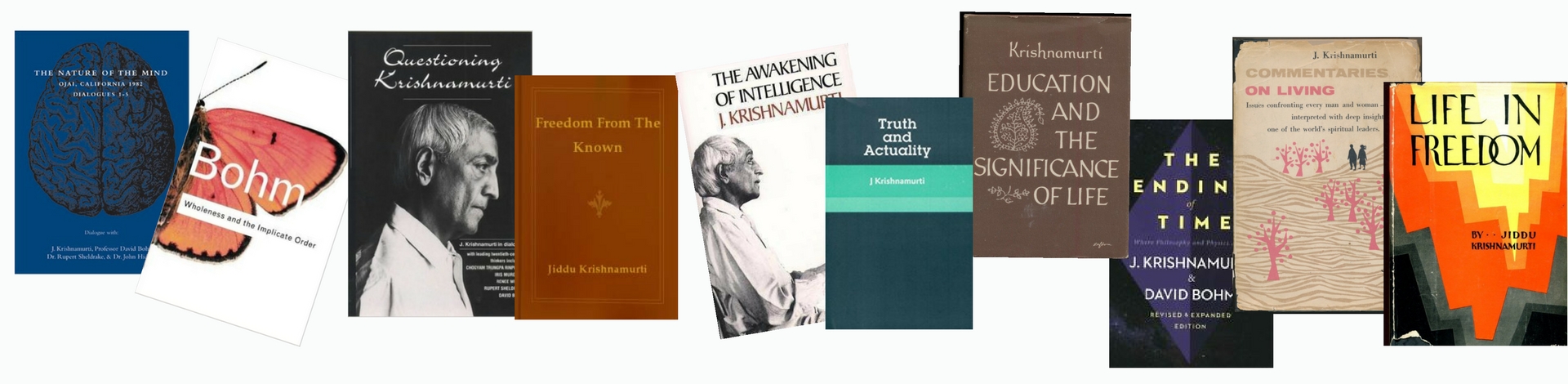
Hello. Am going to start writing more regularly. The topics may seem random but on some level they are intentionally interconnected. The first few times I may seem to ramble, with lots of padding, but then will try to hone in. Firstly, not everyone has a search, Young people do seem to have a curiously but by my experience from talking with many, as young people get more into the life groove of being independent etc. in the thirties, it can tend to wane. So we do want to feed that inner fire or at least keep the ember alive.

Interestingly, from the very beginning a conundrum arises as this search, this interest, this passion, even, is a form of desire, and we are told by spiritual teachers (imo definitely including Gurdjieff and Krishnamurti) in so many words, or at least it is suggested, that desire is bad. Well is it bad? Let’s look. Firstly we are making a mental construct. That is like a room or a box, speaking of box not necessarily in a negative sense, though it could be, but as a container. My theme for this series of messages is that of framing; at this point in an emerging paradigm, almost everyone is looking urgently and with great interest for a new but expansive yet also comprehensive way to use language. So how does this all work? Here is some food for thought, and back very soon.